Is it possible to map the velocity to the exciter type? Like if you hit between x and y velocity, it uses the air, another range gives you strike?
2 Likes
I got excited about a similar idea yesterday and started setting up a zoia patch to remap midi velocity to the tone and position CCs. Super busy these next couple weeks, but hoping to find some quiet time to work on this and learn more about the pedal over the holidays. Excited to see what other people do with it.
Unfortunately I wasn’t recording, but I was playing with Ghosts on my classical guitar last night and got some gorgeous sounds. Incredible. Using the Terrazo touch mode, but also the Endless Loop and the Rhythm mode was awesome. The Chord, Root and Voicing controls gave some very subtle changes to the sound and I was amazed that they almost all sounded pleasing. Colorful varieties like different wines but all pleasing to the palette. I will absolutely do some video recording with this soon; need to reorder my pedalboard a bit.
Without having explored all its wonders (have not hooked it up to my new Chompi as a pedal or as a synth yet), it’s already one of my favorite pedals ever.
Congratulations, Jaak and Hannah.
Jaak- do you plan to have a PDF version of the manual like you do with Ribbons?
I made a PDF from the web manual but the spacing is wonky.
3 Likes
We’ll add a PDF version to the site in the next day or so here.
6 Likes
I’ve got an observation/question about the resonators now that I’ve been playing with Ghosts for a few days.
When I first sat down with it, my expectation for a resonator effect was that the frequencies of the wet effect’s output would be locked to fixed values. So if you’re exciting with an audio source, the pitch of the audio source would be kind of irrelevant (the amplitude is what would excite the resonators). The resonators would only output the prescribed notes based on the root and chord knobs (or MIDI notes). At full 100% wet mix, you’d only hear a fixed chord regardless of the frequencies of your input signal.
However, this isn’t the case with Ghosts (and now that I listen more closely to some demos, the Prismatic Wall), and at full wet, I can still hear the pitch and character of my input signal, along with the resonators chiming away at their designated frequencies.
What character of the resonator effect would carry through the input signal like this? I am 99% sure my mental model of the effect is incorrect. The Lost + Found resonator goes full wet with no input signal left, so I think that’s where my assumption was rooted.
1 Like
The key thing is that a typical/classic resonator isn’t a tone generator. It’s more like a very ringy, tuned filter (or a collection of filters) tuned to musical pitches.
So with Ghosts (and Prismatic Wall), your audio is still the thing exciting the resonators. The resonators reshape your input audio by emphasizing certain frequencies and adding ringing/decay. Because of that, even at 100% wet you can still hear some of the pitch and character of your input, especially if the input is already pitched (guitar, voice, synth).
If you excite it with something more like a click, a muted tap, a very short pluck, or noise, you’ll hear the “fixed notes” behavior more clearly. In that case the resonator’s own tuned frequencies dominate, and it sounds closer to a chord that doesn’t care what note you played.
On Lost & Found: I haven’t used it, but from what I’ve seen/heard it seems closer to an analyze-and-resynthesize approach (it listens to your input and then generates new waveforms from it). That can sound more “fully wet” because the original audio isn’t being reshaped or filtered, it’s being re-generated. You’re mostly hearing the generated signal instead of the original input.
That’s a different approach than Ghosts, which uses physical modeling-style filtering and resonance, not pitch tracked resynthesis.
21 Likes
Brilliant, thank you for the detailed response
Excellent and detailed response!
There’s a reason that, for example, the Prismatic Wall is called “sympathetic resonator”. Pitch characteristics of a primary audio signal will have an impact on the resonators, that will be “excited” by this signal (hence the term “sympathetic”).
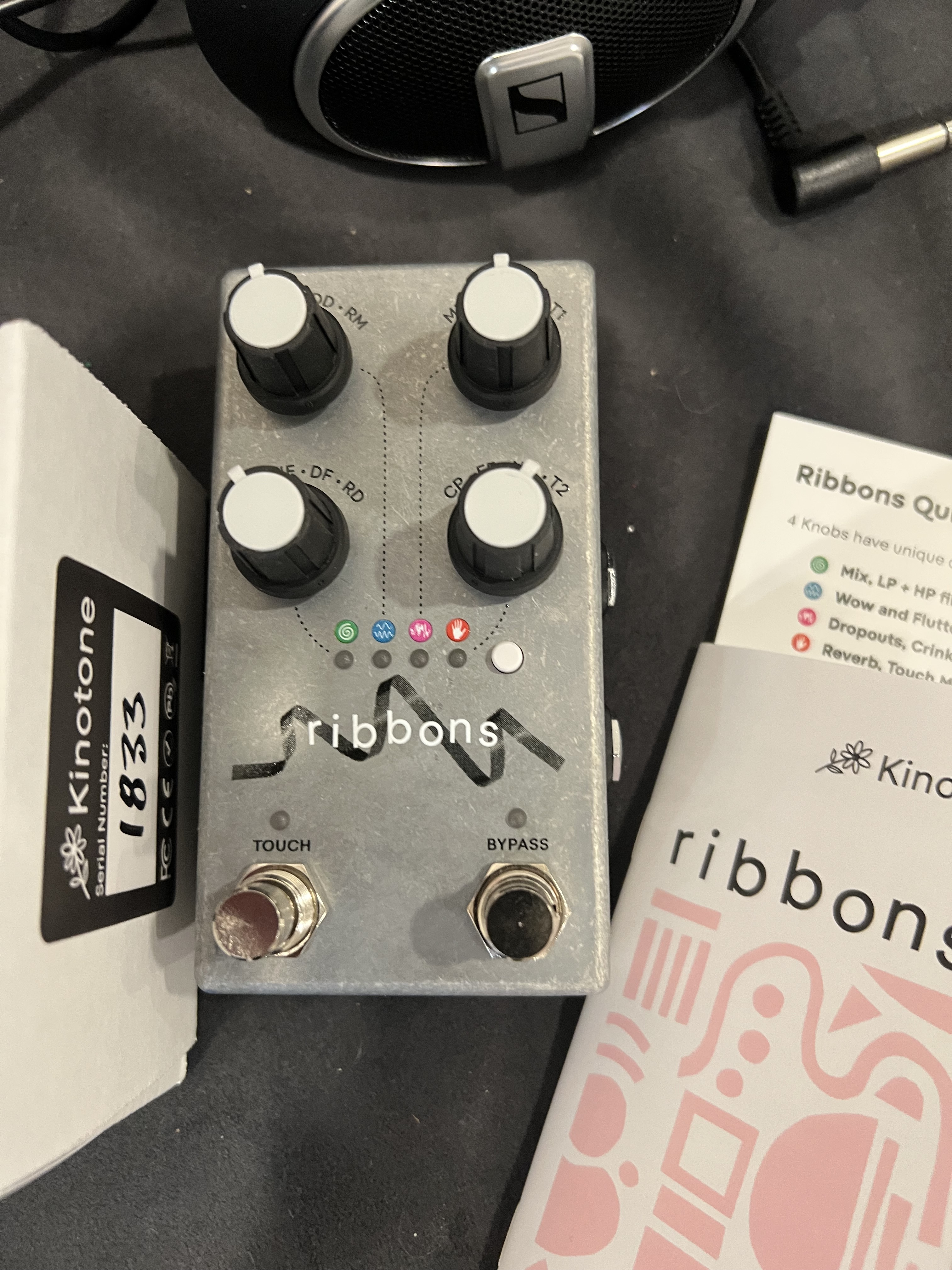
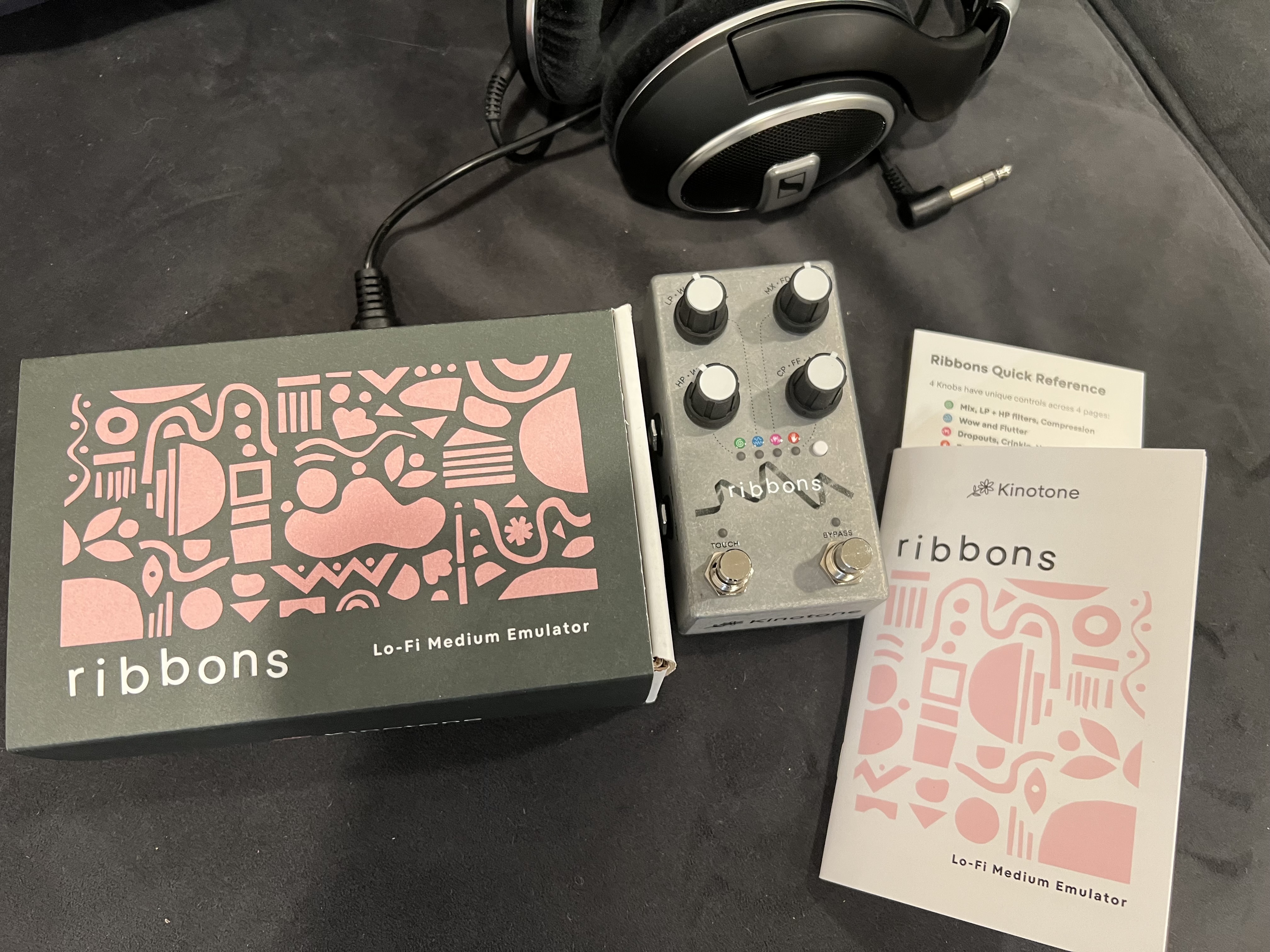
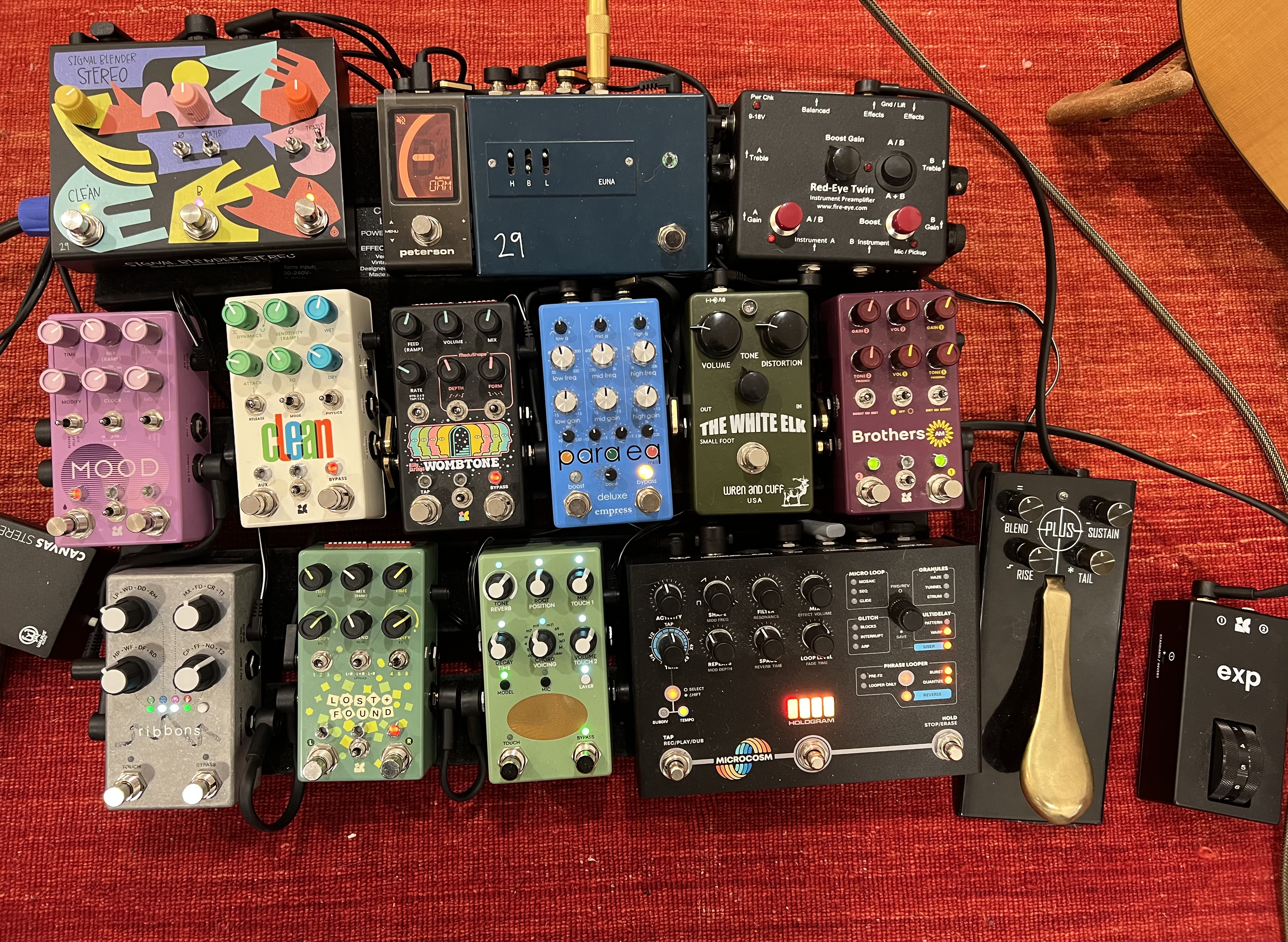
Wow.
I am still working through finding my sweet spot on Ghosts, but I’m starting to see…
Ribbons?!? What can I say? INSTANTLY one of the most inspiring pieces of musical equipment I have ever used. UNREAL, really.
Thank you, Kinotone! Merry Christmas!
4 Likes
this is exactly what i was thinking
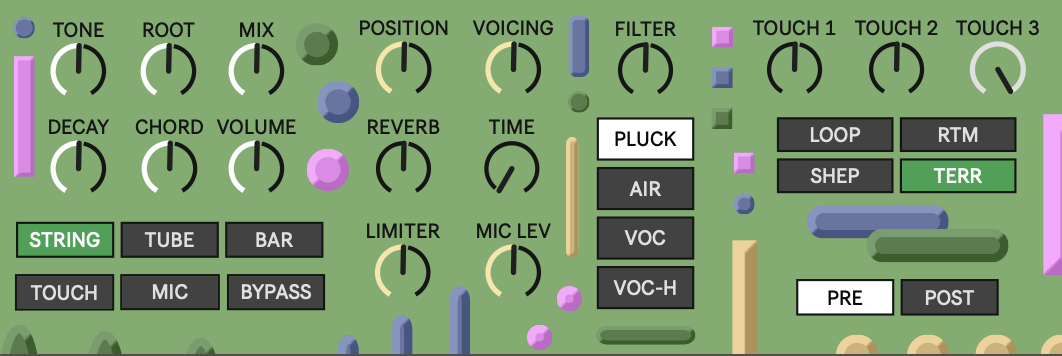
hi all! realize there’s likely an official one coming as well, but wanted to share a little max for live device I made for ghosts. let me know if you have suggestions or find any bugs!
11 Likes
Received my shipping notice for Sparks, so psyched it’s on the way. Excited to try it but also sad—since I already have Ghosts and Ribbons, this means no more Kinotone pedals to look forward to for the foreseeable future.
But looking forward to hearing more about the midi keyboard thing… @jaakjensen!
4 Likes
Anxiously awaiting my chance to join the Kinotone family over here
1 Like
well, it will be a joy to hear what you make of them, now that you have the trifecta and now that you are in the driver’s seat. Sparks is on its way for me as well.
Hi - new user here and dying to get my hands on Kinotone Pedal, or all of them. From what I’ve seen, availability seems to be the most driving reason for joining the forum - but now that I’m here, I’m impressed with the way it drives engagement and feedback. Hope that we hear about more batches sometime soon, but understand that Jaak is operating as a two-person team and that Minneapolis has bigger problems right now. Sending support from Hong Kong!
3 Likes
grabbed this yesterday, awesome work!